English
×
All rights reserved. All content and visuals used on this site
belong to KSP Machine and unauthorized use is subject to legal action.

Standard Industrial Parts Washing Machines

Standard Industrial Parts Washing Machines Konya

Custom Designed Industrial Parts Washing Machines

Custom Designed Industrial Parts Washing Machines Konya

Solvent-Based Industrial Parts Washing Machines

Solvent-Based Industrial Parts Washing Machines Konya

Industrial Sandblasting Machines

Industrial Sandblasting Machines Konya

Other Machines and Equipment

Other Machines and Equipment Konya

Key Considerations for Ultrasonic Washing Systems

27 Ocak 2026

Excellence in Precision Cleaning: Key Considerations for Ultrasonic Washing Systems

In industrial production, especially in sectors like aerospace, medical, and defense where there is zero margin for error, "precision cleaning" is a necessity. At KSP Machine, our Ultrasonic Cleaning Systems provide microscopic cleaning by removing contaminants even from the most complex geometries using cavitation technology.

However, to maximize efficiency and protect equipment life, there are critical points to consider during the operation. Here are professional tips to optimize your ultrasonic cleaning processes:

1. Correct Chemistry and Surface Tension

Ultrasonic cleaning is not just a process performed with water. The cleaning solution facilitates the formation of cavitation bubbles and the dissolution of contaminants.

  • Alkaline Solutions: Ideal for oils and organic soils.
  • Acidic Solutions: Preferred for rust and scale removal. Using chemicals unsuitable for the part material (aluminum, brass, or stainless steel) can lead to cavitation erosion or surface discoloration.

2. The Importance of Degassing

When a tank is freshly filled, the water contains dissolved air. These air bubbles absorb the energy of ultrasonic waves, weakening the cavitation effect. For effective cleaning, always run the system for 5-10 minutes to "Degas" the liquid before placing parts in the tank.

3. Temperature Control and Viscosity

Heat acts as a catalyst in the cleaning process. Generally, temperatures between 50°C and 65°C reduce the viscosity of oils and increase chemical penetration. Thanks to the precise temperature control in KSP Machine systems, both energy efficiency is ensured and thermal deformation of parts is prevented.

4. Part Placement and Basket Usage

Ultrasonic waves radiate from transducers at the bottom of the tank. Direct contact of parts with the tank floor dampens vibrations and can damage the transducers. Therefore, parts must be cleaned using a suitable stainless steel basket or fixture. Ensuring parts are not overcrowded allows sound waves to reach every point equally.

5. The Final Touch: Rinsing and Drying

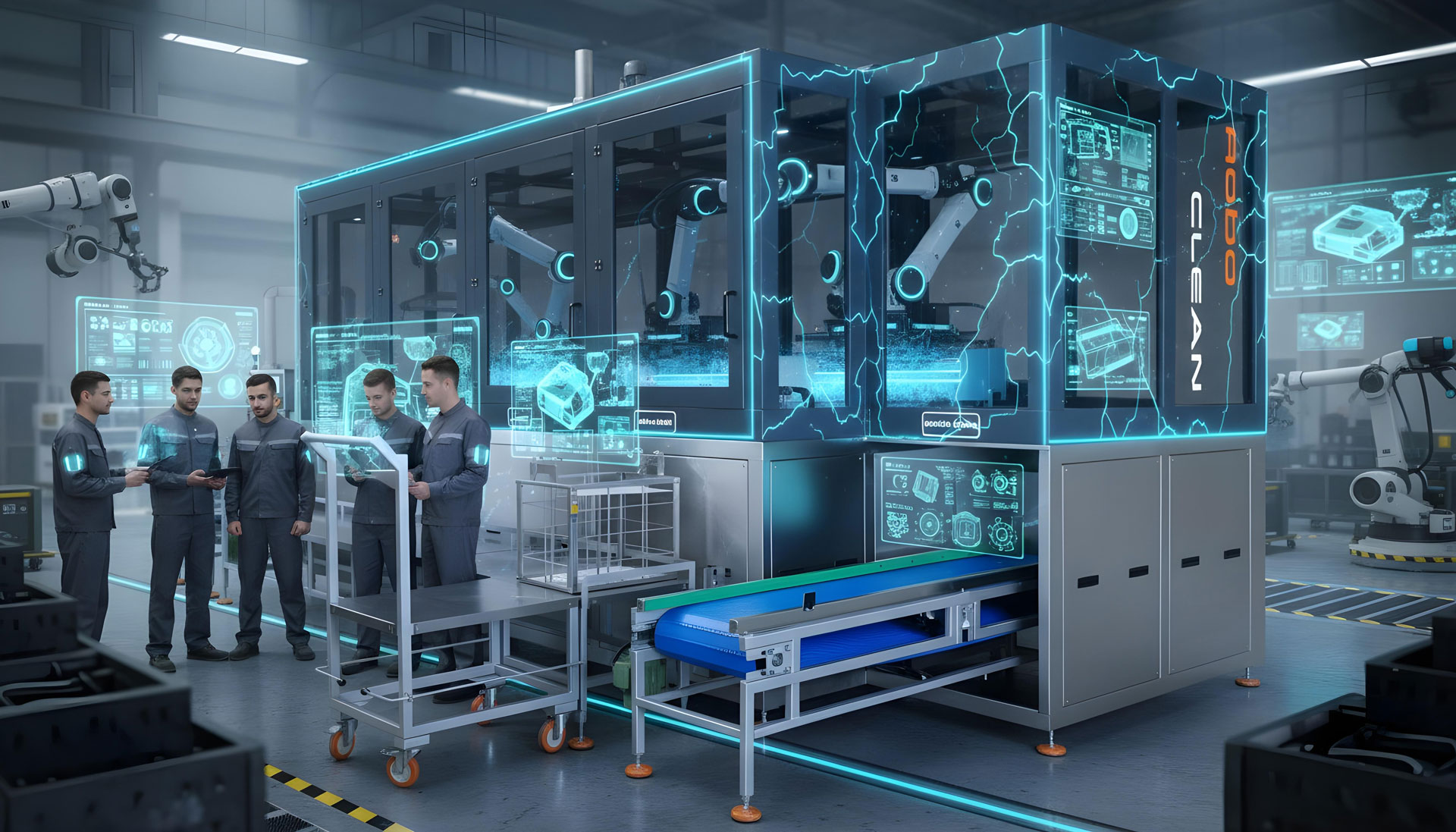
After ultrasonic cleaning, microscopic chemical residues may remain on the parts. To prevent spotting on sensitive surfaces, rinsing with deionized or distilled water is critical. As seen in KSP’s Multi-Process (MultiWash & RoboClean) systems, an integrated drying stage after washing completely eliminates the risk of corrosion.

As KSP Machine, we have been digitalizing your cleaning processes and increasing your efficiency with our innovative engineering solutions since 1998. Contact us to learn more about our industry-specific ultrasonic solutions.

Related News